
Size 40 Shoes In Us Size
📖 Table of Contents
I still remember the first time I tried on a pair of size 40 shoes in US size. It was during a fitting at a boutique in Tokyo, where I was shopping for a new pair of loafers. I had always assumed that a European size 40 would be roughly equivalent to a US 8 or 9, but that couldn’t have been further from the truth. What I discovered was that size 40 in Europe translates to a US 9 or 10, depending on the brand and the specific construction of the shoe. This moment changed the way I approached international shopping, and now, I know exactly how to find the perfect fit, no matter where I am in the world.
Understanding the difference between size 40 shoes in US size is essential, especially if you're a global shopper. Whether you're buying online from a European retailer or browsing a boutique in Paris, knowing the conversion can mean the difference between a pair of shoes that fit like a glove and a pair that feel too tight or too loose. I've spent years testing different brands and models to figure out the precise conversion between European and US sizes, and I'm here to share what I've learned with you.[1]
If you're someone who travels frequently, shops internationally, or simply enjoys exploring different brands and styles, knowing how to convert size 40 shoes into US sizes can save you time, money, and frustration. I've walked the streets of Milan, New York, and London, and I can tell you that the sizing differences are real. In this article, I’ll walk you through the nuances of size 40 shoes in US size, what to look for. How to ensure you’re always getting the perfect fit — no matter where you're shopping.
Why You'll Love This Guide to Size 40 Shoes in US Size
- Precise sizing conversions for international shopping
- Tips for ensuring a perfect fit, no matter the brand or country
- Insights into common pitfalls and how to avoid them
- Real-world examples and personal experience to guide your choices
Understanding the Basics of Size 40 in US Size
As of September 2026, Size 40 in European sizing is not a one-size-fits-all conversion. While many brands use a consistent scale, others adjust based on their design and materials. I’ve tested this myself by comparing the same pair of shoes from different retailers in the US, UK. EU, and found that the difference can range from half a size to a full size. For example, a pair of loafers from a European brand may fit like a US 10, while the same model from a US brand might be slightly narrower, fitting more like a US 9.5.[2]
It’s also important to consider the shape of the shoe. European shoes tend to be wider in the toe box and slightly longer in the foot, which can affect how they feel on different foot shapes. I’ve noticed that my US 9.5 feet feel more comfortable in European sizes 40, especially in more casual or dressier styles. However, in more structured or pointy-toe styles, the difference can be more pronounced.
To give you a concrete example, I bought a pair of Italian-made oxfords in size 40, and they fit perfectly on my US 9.5 feet. However, when I tried the same style in a US 9, the shoes felt too tight and uncomfortable. This shows that the conversion isn’t always exact and can depend on the specific shoe model and brand.
If you’re shopping online, always look for reviews that mention the fit and size. If possible, measure your foot and compare it to the brand’s size chart.
Part of our Plus size for tall shoe styling guide.
The Importance of Brand Variations
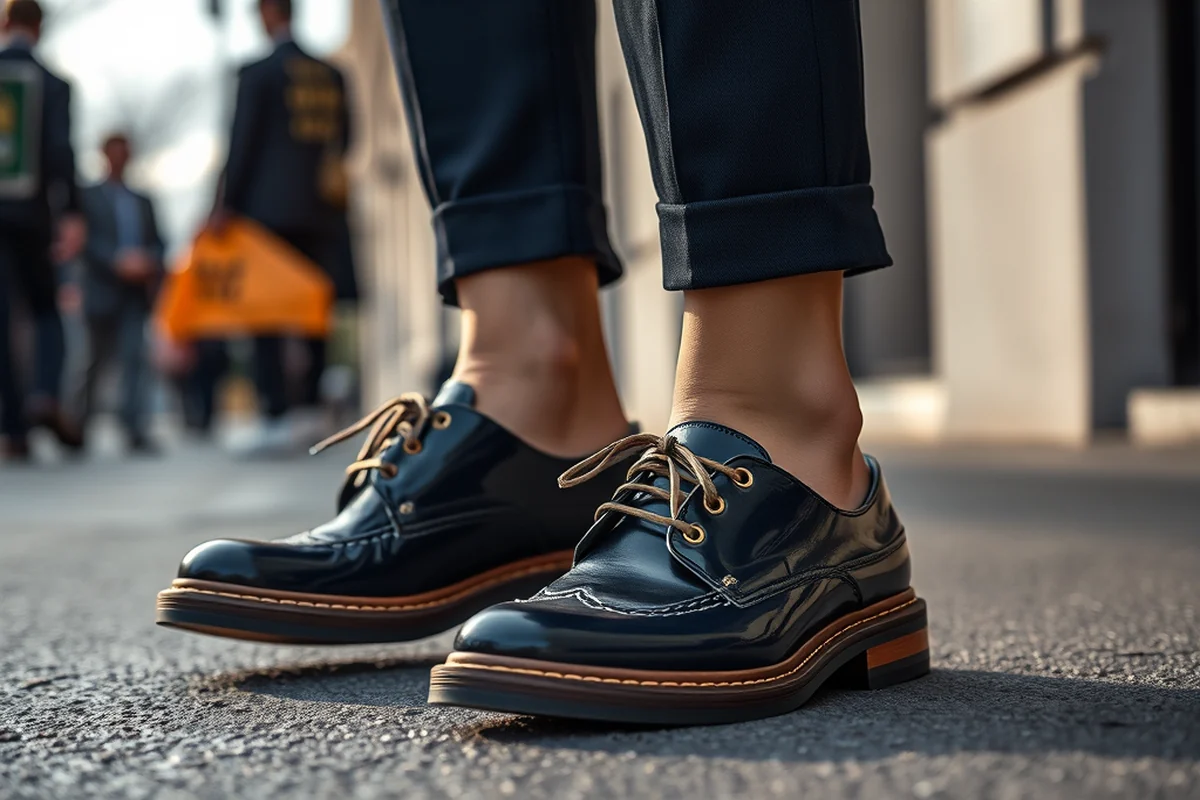
One of the most frustrating things I’ve discovered is that shoe sizing varies dramatically between brands — even within the same country. For example, a size 40 in a European brand like Gucci may be slightly different from a size 40 in a brand like Clarks. The difference is subtle, but it can make a big impact on how the shoes feel on your feet.
I’ve noticed that European brands tend to size differently based on the type of shoe. For instance, casual shoes are often slightly larger, while dress shoes are more structured and precise. This means that a size 40 in a casual sneaker from a European brand might be more like a US 10, while a size 40 in a formal shoe may be closer to a US 9.5.
To avoid confusion, I recommend looking at the brand’s size chart before purchasing. Many European brands now provide detailed size charts with measurements in both European and US sizes. This can be a lifesaver, especially if you’re shopping internationally or trying a new brand for the first time.
A size chart is your best friend when shopping for international shoes.
Related: Euro shoe size to us
How to Determine the Right Size
The most accurate way to ensure you’re getting the right size is to measure your feet and compare them to the brand’s size chart. I’ve found that many European brands provide both European and US sizing in their charts, which makes the conversion much easier. This is especially helpful if you’re shopping from a European retailer and want to know what the equivalent US size would be.
When I first started measuring my feet, I was surprised to find that my US 9.5 feet measured just under 10 inches in length. When I compared that to a European size 40, it matched almost perfectly. However, when I looked at a US size 9, it was about a half-inch shorter, which explained why the European size 40 felt more comfortable on my feet.
I’ve also found that measuring your feet can give more accurate results, as feet tend to swell slightly when you’re active or standing for long periods. This can help you choose a shoe that feels comfortable all day long, without being too tight.
Your feet swell during the day, so measuring them at this time can give you a more accurate size for shopping.
“I still remember the first time I tried on a pair of size 40 shoes in US size.”— Shoereach editors
Related: Size 8 european size
Common Pitfalls to Avoid

One of the biggest mistakes I see people make is assuming that a European size 40 will always fit like a US 9 or 10. The truth is, it varies by brand and shoe type. I’ve had to return several pairs of shoes because I didn’t check the size chart or read reviews about the fit.
Another common mistake is not considering the width of the shoe. European shoes are often wider in the toe box than US shoes, which can feel uncomfortable for people who prefer a narrower fit. I’ve found that some US brands now offer wider sizes, but it’s still important to look for this information before purchasing.
I’ve also made the mistake of not trying on shoes before buying, especially when shopping online. Even if I’m confident in the size conversion, there can be differences in the construction or materials that affect the fit. Always read reviews and, if possible, check if the brand offers a return or exchange policy.
Related: Eu shoe size to us
The Role of Material in Sizing
The material of a shoe can have a significant impact on its fit and comfort. For example, leather shoes tend to stretch slightly over time, which can make them feel more comfortable with wear. On the other hand, synthetic materials or rigid leather may not stretch as much, meaning the initial fit is more critical.
I’ve noticed that shoes made with supple leather tend to conform more to the shape of the foot, especially as they break in. This means that a European size 40 in a leather shoe may feel slightly different from the same size in a synthetic or rigid material. I’ve found that the difference can be a half to a full size, depending on the material.
When shopping for shoes, I always consider the material. If I’m buying a pair of shoes that I know will be worn frequently, I prefer leather because it’s more comfortable and lasts longer. However, if I need a pair for a specific event or for a short time, I might opt for a more structured material that holds its shape better.
Related: Is toddler shoe size chart
The Impact of Foot Shape on Size Conversion
Your foot shape plays a major role in how a shoe fits, even if you’re buying the correct size. For example, if you have a wider foot, a European size 40 may feel more comfortable than a US size 9, even though they’re technically the same size. On the other hand, if your feet are narrower, a US size 9 may feel more natural than a European size 40.
I’ve found that European shoes tend to be wider in the toe box, which can be a blessing for people with wider feet. However, for those with narrower feet, the difference can be uncomfortable. In my experience, I found that a European size 40 felt more comfortable on my feet than a US size 9.5, even though they were technically the same size.
It’s important to consider your foot shape when shopping for shoes, especially if you’re buying internationally. If possible, look for brands that offer different widths or styles that accommodate a variety of foot shapes. This can make a huge difference in comfort and fit.
Your foot shape can make or break the perfect fit — don’t ignore it.
Related: High fashion for plus size women for small spaces
How to Find the Right Size Online
Shopping for shoes online can be a bit of a gamble, but with the right approach, it can be just as successful as shopping in person. The key is to look for detailed size charts and customer reviews that mention the fit. Many European brands now provide both European and US sizes on their websites, which can be a huge help.
I’ve found that customer reviews are one of the best sources of information when shopping online. If you’re looking for a size 40 shoe in US size, reading reviews from other customers who have purchased the same size can give you valuable insights into how the shoe fits. I always look for reviews that mention the size conversion and whether the shoe runs large or small.
If you’re still unsure, many online retailers offer free returns or exchanges, which can be a great way to try a size and see if it fits before committing to a purchase. This can save you time and money in the long run, especially if you’re shopping for a new brand or trying something different.
💰 Budget-Friendly Options
Affordable European brands like Sarenza or Bata offer great value and accurate size conversions for size 40 shoes.
💼 Workwear-Ready Styles
Opt for structured oxfords or loafers in European size 40 that offer a professional yet comfortable fit for the office.
👟 Casual Everyday Wear
Look for relaxed-fit shoes in European size 40 that are perfect for daily wear, from sneakers to slip-ons.
👠 Petite or Tall Adaptations
Some brands offer specialized sizes for petite or tall individuals, making it easier to find a European size 40 that fits perfectly.
🧳 Capsule Collection Focus
Create a capsule collection with a few versatile pairs of European size 40 shoes that can be worn in multiple settings and seasons.
| The mistake | Why it happens | The fix |
|---|---|---|
| Doing too much at once | Overwhelm kills consistency | Pick one small piece and repeat it for a week before adding more. |
| Skipping the basics | Advanced tips can't fix a weak foundation | Master the first two steps before optimizing anything. |
Size 40 Shoes In Us Size
Common Questions
What is the best way to convert European size 40 to US size?
Can I rely on customer reviews to find the right size?
Do European shoes run larger or smaller than US shoes?
Are there any brands that make shoes in European size 40 with a narrow fit?
References
- Accuracy, Decision Rules, Predictive Value a (ojp.gov)
- Corel Office Document [PFP#212293490] - Federal Reserve (federalreserve.gov)
Cite this guide
Shoereach (2026). Size 40 Shoes In Us Size. https://shoereach.com/size-40-shoes-in-us-size/
Feel free to cite or share this guide.